My Approach · Psychodynamic Therapy
So... what actually happens in Psychodynamic Therapy?
Good question. And a fair one — because "psychodynamic" sounds a little intimidating, and therapy already feels like a big step.
Most therapy asks what. Psychodynamic therapy asks why.
Other approaches
What are you thinking or doing?
Focus on changing thoughts and behaviors. Useful tools — but they sit on top of the problem, not underneath it.
Psychodynamic therapy
Why are you thinking or doing it?
Goes beneath the surface. Understands the roots — so change is real and lasting, not just managed.
The idea is that a lot of what drives our emotions, our relationships, and our patterns lives outside our awareness.
Not because we're hiding it — but because that's just how the mind works. Old experiences, early relationships, things we learned to feel or not feel — they shape us in ways we can't always see.
Psychodynamic therapy brings that stuff into the light. Gently. At your pace.
What does a session actually look like?
Honestly — it looks like a conversation. There's no worksheet, no homework, no checklist to complete before next week.
You talk. I listen — really listen, not just for what you're saying but for what's underneath it. We notice patterns together. We make connections. Sometimes something clicks and it feels almost obvious in hindsight. Sometimes it takes longer and that's okay too.
The relationship between us is actually part of the work. How we connect, where things feel easy or uncomfortable — that tells us a lot about how you connect with people in your life outside this room.
For Children — Playtherapy
For Children — What looks like play is actually processing.
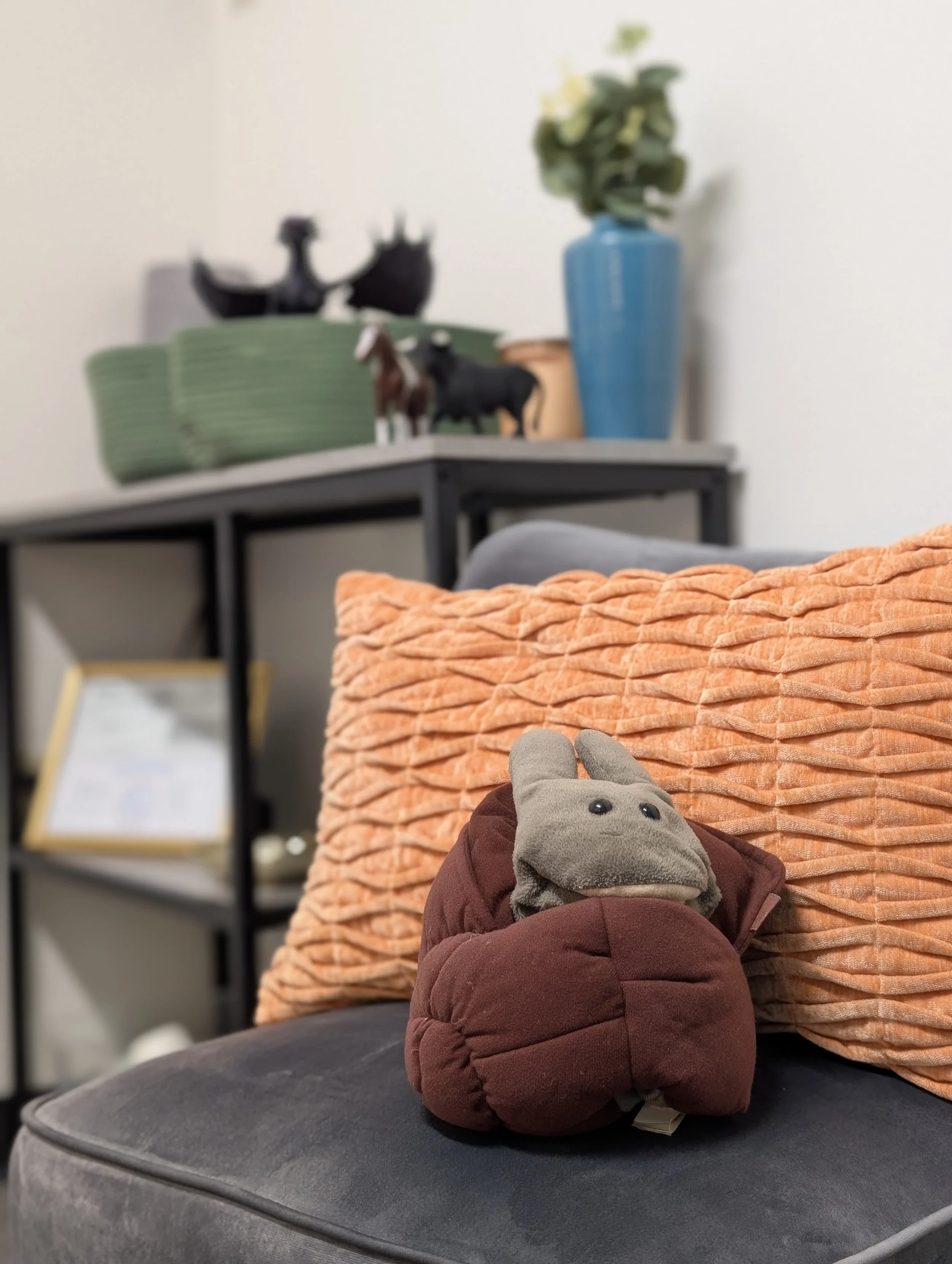
Kids don't always have words for what they're feeling. That's not a flaw — that's just developmentally where they are. So with younger children, we use play therapy as the primary language instead of talk.
Play therapy is exactly what it sounds like — and also much more than it sounds like. A child building a block tower and knocking it down, acting out a story with puppets, drawing something that "just came to mind" — that's not just playing. That's processing. That's a child showing me, in the only language they have, what's going on inside.
In the playroom, children are in charge. They lead, I follow — and I pay very close attention. Through play, children can express emotions they can't yet name, work through confusing or scary experiences, and practice new ways of relating — all without ever having to sit still and "talk about their feelings."
It's one of the most powerful things I get to do in this work. And honestly? It never gets old.